- Says ‘your reforms suffocating ordinary Nigerians’
BY BONNY AMADI
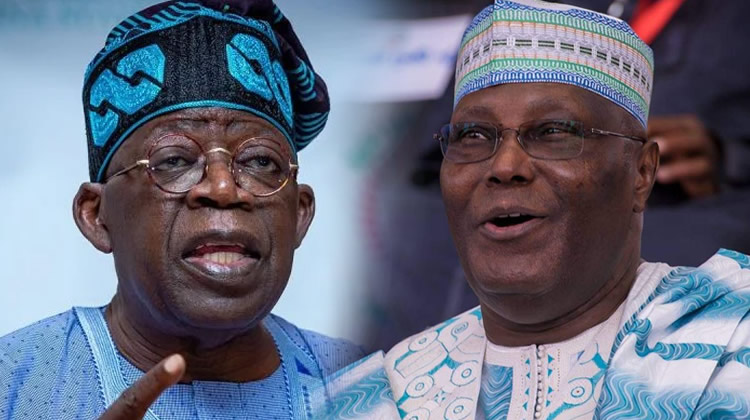
Atiku Abubakar, former vice-president and presidential candidate of the African Democratic Congress (ADC), has accused the federal government of continuing to borrow heavily while Nigerians grapple with rising living costs.
This was as reports have it that the president ‘s schedule to return to the country last weekend has been postponed.
Meanwhile, Atiku relayed his thoughts in a statement issued on Saturday by Phrank Shaibu, director of strategic communications of the ADC Presidential Campaign Council.
He said the administration of President Bola Tinubu had removed petrol subsidy, increased government revenues. and continued borrowing, while Nigerians faced higher food, transport, energy, and other household costs.
“A government that says more money is coming in must explain why it keeps borrowing and why the people paying for its policies cannot see the promised gains,” Atiku said.
He cited figures from the Debt Management Office (DMO), saying Nigeria’s public debt rose from N49.85 trillion in March 2023 to N166.79 trillion as of June 30, 2026.
“I expect President Tinubu to put the full account before Nigerians,” he said. “He should identify the old debt newly recorded, the foreign debt whose naira value rose with the exchange rate, and every new loan contracted since he assumed office.”
Atiku also called for details of how much of the debt had been repaid and what is outstanding.
“Accounting explanations must not become a hiding place for fresh borrowing,” he said.
ECONOMY PRODUCING TWO NIGERIAS’
Atiku said the country’s debt situation should be considered alongside what he described as a widening gap between official claims of economic recovery and the experiences of ordinary Nigerians.
Atiku further referred to recent petrol and diesel prices, saying higher energy costs had intensified pressure on household budgets.
“The philosophy of an economic reform cannot be that the poor surrender more and more while those already insulated from hardship become increasingly comfortable,” he said.
“Nigerians were promised that today’s pain would produce tomorrow’s gain. After more than three years, they are entitled to ask: gain for whom?”

Recommended for you




Leave a Reply
Leave a Reply