- Behind host country, Brazil
BY BONNY AMADI
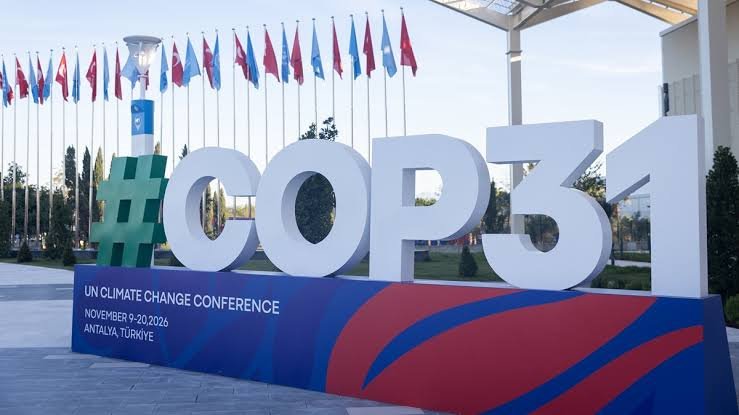
Nigeria has registered the third-largest national delegation for the ongoing COP31 climate summit in Antalya, Türkiye, with 1,506 participants, as provisional figures suggest that the conference could become the largest gathering in the history of the United Nations climate negotiations.
An analysis by Carbon Brief of provisional registration lists published by the United Nations Framework Convention on Climate Change (UNFCCC) shows that Nigeria is behind host country Türkiye, which registered 2,950 delegates, and Brazil, with 1,994.
China, with 1,021 participants and Indonesia, with 978, complete the top five countries with the largest delegations.
The figures place Nigeria ahead of several major economies and countries with significant roles in international climate negotiations, including Australia, Italy, Japan, and France.
However, the composition of Nigeria’s delegation offers another perspective on the scale of its representation.
Of the 1,506 Nigerian participants, 573 are registered as party delegates, while 933 fall under the overflow category. These are additional participants nominated by countries and other eligible groups who are not necessarily listed individually on the official delegation registers record-breaking summit.
The provisional figures put total in person participation at 92,934, exceeding the previous record set at COP28 in Dubai, which attracted more than 80,000 participants.
The figures could make COP31 the largest climate conference since the negotiations began in Berlin in 1995. However, the UNFCCC will publish the final attendance figures after the summit, based on participants who collect physical accreditation badges at the venue.
More than 3,300 additional participants have registered to attend virtually, bringing the overall number of registrations above 95,000.
Beyond the scale of attendance, the figures reveal an unusual feature of this year’s summit: the number of people registered as host country guests.
Carbon Brief identified 14,285 participants in this category, substantially higher than the 1,324 recorded at COP30 in Brazil, 1,651 at COP29 in Azerbaijan and 4,202 at COP28 in the United Arab Emirates.
The category, introduced into COP registration lists in recent years, accounts for a significant share of the unusually high participation figures at COP31.
Who is represented at the negotiations?
National delegations are not the only groups shaping the gathering. The provisional register also includes 13,388 observers and 3,645 media representatives.
More than 12,000 of the observers represent non-governmental organisations, including environmental advocacy groups, philanthropic foundations and industry lobby organisations.
Their presence reflects the broad range of interests seeking to influence discussions on climate finance, energy transition, adaptation and other issues at the summit.
The registration figures also raise questions about representation within national delegations. An assessment of party delegates based on titles assigned by the UNFCCC puts the overall gender distribution at 59 per cent men and 41 per cent women.
Although this represents a gradual improvement in gender representation compared with earlier climate conferences, the figures suggest that men still account for a larger share of national negotiating delegations.
Climate finance, fossil fuels dominate discussions
Beyond the record attendance, COP31 is taking place against growing pressure on governments to turn previous climate commitments into measurable action, particularly on climate finance, fossil fuel dependence and the transition to cleaner energy

Recommended for you



Leave a Reply
Leave a Reply