BY BONNY AMADI
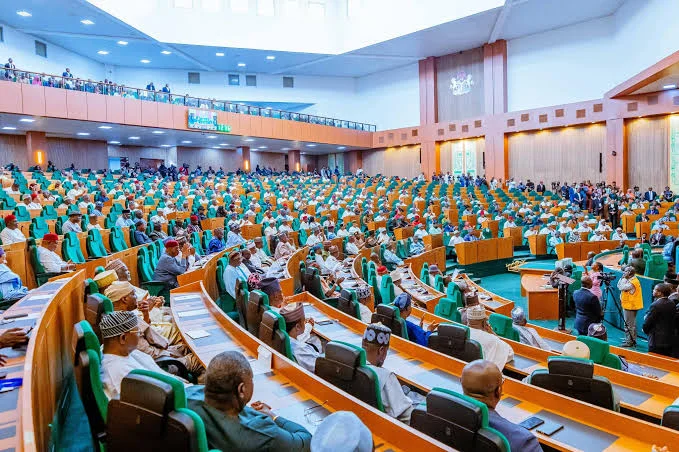
The Nigerian House of Representatives on Wednesday descended into a heated and rowdy session as lawmakers clashed over an attempt to summon President Bola Tinubu to explain the poor implementation of the 2025 budget, the delayed release of appropriated funds, and worsening funding gaps affecting ministries, departments, and agencies (MDAs).
The controversy began when Benedict Etanabene, who represents Okpe/Sapele/ Uvwie Federal Constituency of Delta State, raised the issue under a matter of personal explanation, calling on the House to invite President Tinubu to account for the persistent failure to implement budgets despite trillions of naira approved by the National Assembly.
However, the Speaker, Abbas Tajudeen, ruled that the matter could not be debated because it was raised under a personal explanation.
Under the Standing Orders of the House of Representatives, a personal explanation allows members to clarify or explain issues affecting them personally or matters requiring immediate clarification.
Such statements are ordinarily not subject to debate or decision by the House.
Mr Tajudeen informed lawmakers that Mr Etanabene’s point had been noted but could not be entertained on procedural grounds, a ruling that immediately sparked protests from some members and briefly disrupted proceedings.
Shortly afterwards, the member representing Aba North and South Federal Constituency of Abia State, Alex Ikwechegh (APGA), revived the issue by bringing a motion under matters of urgent public importance, effectively reopening the debate through the appropriate parliamentary procedure.
Unlike a personal explanation, a motion of urgent public importance is a substantive legislative business. Copies of the motion are circulated to members before debate, allowing lawmakers to deliberate on its contents and vote on clearly stated prayers.
Moving the motion, Mr Ikwechegh argued that Sections 80 and 81 of the 1999 Constitution vest the power of appropriation in the National Assembly, and that the integrity of the budget process depends not merely on passing appropriations but also on the timely release, cash backing, and utilisation of approved funds.

Recommended for you






Leave a Reply
Leave a Reply