By Nonye Moses
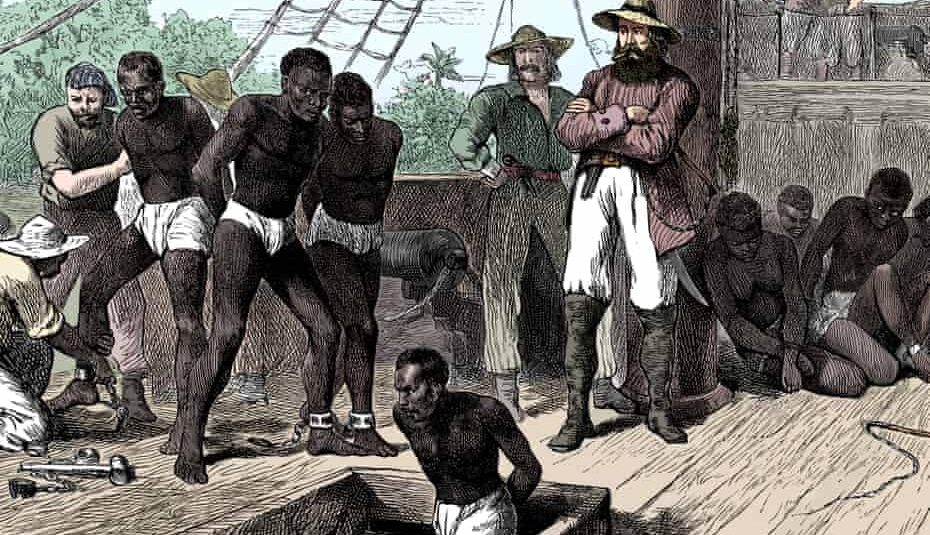
Centuries after millions of Africans were captured, sold, dehumanised and scattered across the world, the United Nations has moved to name that history in stronger terms. On paper, that should matter. But for many Africans, the real question is not whether the world has finally recognized the horror of slavery. The real question is: what exactly does that recognition do now?
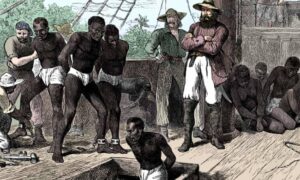
For Africans and descendants of the enslaved, this is not new knowledge. Black people have always known what slavery was. Africans have always known what slavery was. The descendants of those who were dragged from their homes, packed into ships, sold into bondage, renamed, brutalized and cut off from their bloodlines have never needed the world’s permission to understand the scale of what happened.
So, if the world is now choosing to describe the trafficking and racialized chattel enslavement of Africans as one of humanity’s gravest crimes, the response from many may reasonably be: “Okay. And?”
That response is not cynical. It is serious. Because when a crime this vast is finally named more honestly by powerful institutions, the issue is no longer whether the victims feel “seen.” The issue is whether the recognition carries any consequence, responsibility or cost for the world that benefited from it.
At the heart of the declaration is an attempt to move the history of slavery away from soft language and polite historical phrasing. For centuries, slavery has often been discussed in the language of “trade,” “colonial history,” or “labour,” as though it were merely one unpleasant feature of the old world. But what happened to Africans was not simply labour exploitation or unfortunate history. It was a vast, organized system of racialized human theft.
That is what makes the phrase “racialized chattel enslavement” so important. It is not just saying Africans were enslaved. It is saying Africans were turned into inheritable property because they had been racialized into Blackness. Their bondage was made permanent. Their children inherited it. Their humanity was denied not by accident, but by design. This was not simply cruelty. It was a system. And it was one of the systems that helped shape the modern world.
That is also why this declaration is not only about the past. It is about how the present came to be. The wealth of empires, the rise of global trade, the power of financial institutions, the architecture of race and the imbalance of global development cannot be honestly discussed without slavery sitting at the centre of that story.
Which raises the next question: why now?
The answer is not that the world has suddenly become wiser. The answer is that history is usually only named properly when power is finally pressured enough to name it. The truth did not become true in 2026. The truth was true when Africans were chained in forts, when African bodies were insured as cargo, and when children were sold away from their parents.
So, this moment is not really about new knowledge. It is about new pressure. Over time, pressure has grown from African scholars, Black intellectual traditions, Pan-African movements, Caribbean reparations campaigns, anti-racist activists and descendants of the enslaved who have refused to allow the world to bury slavery under soft language and ceremonial remembrance.
This declaration, then, is not a spontaneous act of moral courage. It is more accurately a concession to truth that has become increasingly difficult to avoid.
Still, the hard question remains: what does this do for Africa now?
The honest answer is that there is no full consolation. There is no equivalent compensation for stolen generations, severed bloodlines, erased names and interrupted futures. No declaration, no curriculum, no ceremony and no legal phrase can return what was destroyed.
But if there is no full consolation, there can still be unfinished justice.
That is where this declaration can become useful, not as comfort, but as claim.
Its value lies not in making Africans feel newly acknowledged, but in strengthening what can now be demanded from the modern world. It can become a stronger basis for truth, dignity, memory, repair and consequence. Because one of the greatest violences after atrocity is not just the atrocity itself. It is the attempt to blur it afterward.
Powerful societies do not only commit harm. They also manage how that harm is remembered.
That is why this recognition matters. At the very least, the world should no longer be allowed to politely lie about what was done to Africans.
But truth, by itself, is not enough. If this declaration is to mean anything, it must move beyond memory into repair. Not because repair can equalize slavery, but because a crime of this scale creates obligations that do not disappear simply because time has passed.
Part of that repair must be educational. Slavery must be taught not as a footnote to empire, but as a system of mass kidnapping, commodification and racial dehumanization. African history must be taught with greater seriousness, not only as a history of suffering, but also as a history of civilizations, resistance and humanity.
Part of that repair must also be cultural. Slavery and colonialism did not only take people. They also damaged memory. Sacred objects, artefacts and archives were looted, displaced or diminished. So if the world is serious, then part of what is owed includes the return of what can still be returned and the rebuilding of what can still be restored.
Then there is the question many people find most uncomfortable: economics. Slavery was not only a moral catastrophe. It was also a system of wealth creation. It generated capital, and much of that capital did not remain in Africa. That means the argument for reparations is not simply emotional. It is structural.
This is why the declaration matters politically, even if it feels emotionally late. It does not automatically produce reparations or legal compensation. But it does make certain arguments harder to dismiss. Once the world has formally elevated slavery in this way, it becomes more difficult for governments and institutions to behave as though present-day inequalities are disconnected from historical violence.
That is also why the voting pattern around the declaration matters. Reports indicated broad support, but not unanimity. Three countries reportedly voted against it: Argentina, Israel and the United States. Their “no” votes are politically revealing, not necessarily because they mean those states believe slavery was unimportant, but because they reveal discomfort with the implications of naming it this strongly.
Some governments may be uneasy with calling slavery “the gravest” crime against humanity because they resist creating an official hierarchy of suffering. That is not an unserious argument. But it is unlikely to be the full story.
A “no” vote can also suggest discomfort with what follows from the wording: stronger reparations claims, renewed anti-racism frameworks, cultural restitution, and harder questions about who benefited and who still benefits.
The United States, for instance, is one of the countries most exposed to the implications of this declaration because it was not merely touched by slavery. It was structurally built through it. Israel’s vote may reflect its own sensitivity to the politics of atrocity hierarchy, especially given the centrality of the Holocaust to its national memory. Argentina’s vote may reflect a mix of legal caution and discomfort with what stronger global language around slavery could later demand.
In each case, the issue may not simply be whether they think something worse existed. The issue may be that they are unwilling to let this truth rise to a level that might begin to demand too much.
And that is perhaps the most important insight of all. The resistance is often not to the history itself, but to the consequences of naming the history properly.
This is where Africa must be careful. The continent should not engage this declaration as though it is merely witnessing a foreign moral event. This concerns Africa directly. So, the question should not be whether the world has finally admitted what happened. The question should be: what can Africa do with this recognition now?
Can African states use it diplomatically? Can it strengthen calls for reparatory justice? Can it support stronger demands for the return of looted artefacts? Can it shape school curricula, museums, scholarship and public memory?
If the answer to those questions remains weak, then the scepticism many Africans feel is justified. Because then this becomes what many fear it already is: a powerful world finally saying out loud what it long benefited from keeping blurry.
That is not justice.
At best, it is an opening.
And perhaps that is where the real significance lies. Not in celebration. Not in emotional closure. And certainly not in applause. The significance lies in whether this recognition can be turned into pressure, pressure for truth, pressure for repair, pressure for memory, and pressure for consequence.
Because Africans do not need the world to tell them what happened to them. The real issue is whether the world is finally prepared to stop enjoying the afterlives of slavery without responsibility.
Until that question is answered seriously, this declaration remains what many Africans may already understand it to be: not justice, not consolation, but a late admission that history has been telling the truth all along.

Recommended for you



Leave a Reply
Leave a Reply