BY MUHAMMAD LAWAL
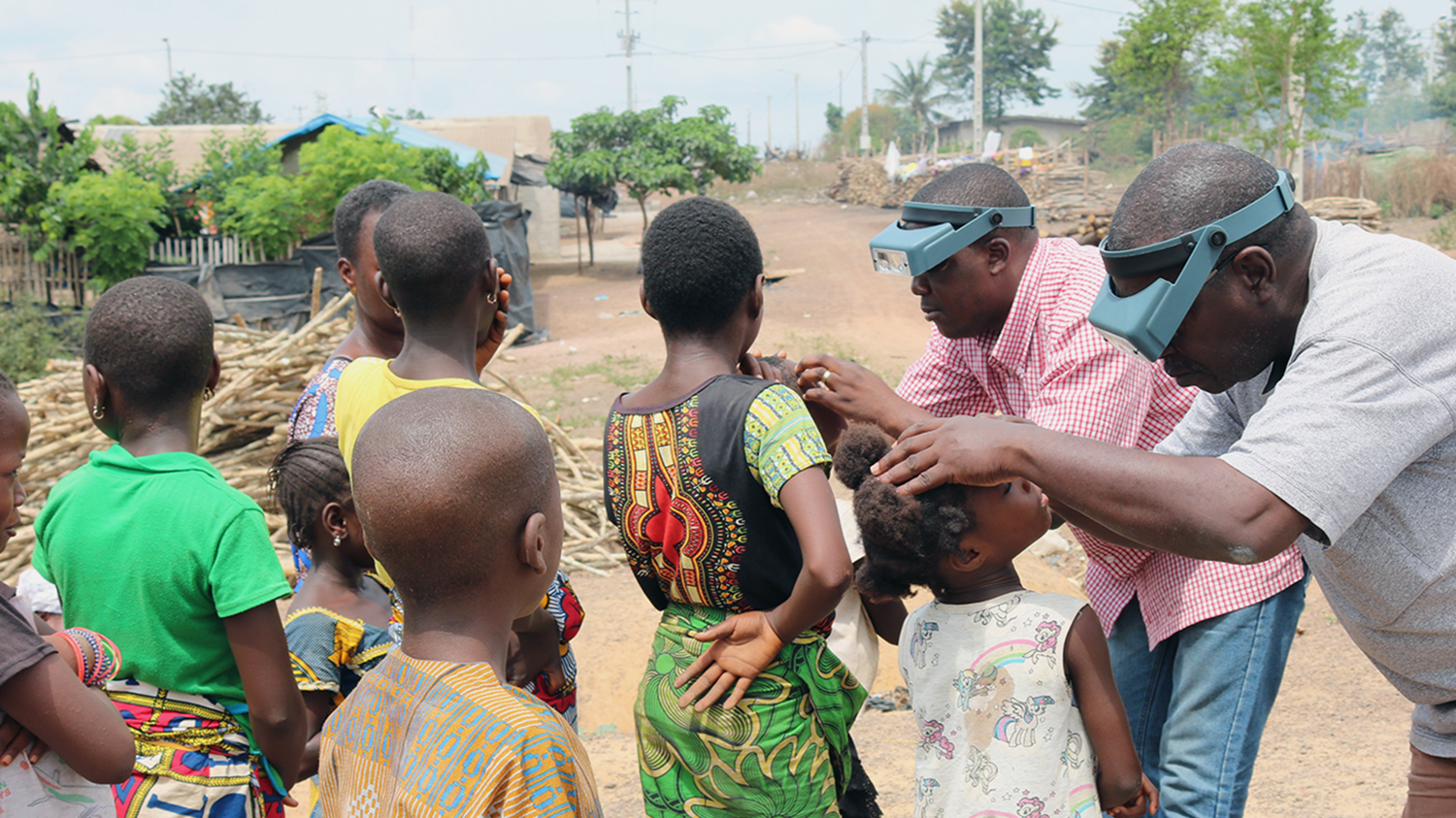
Trachoma, the world’s leading infectious cause of preventable blindness, remains one of the most persistent yet avoidable public health challenges in poor and underserved communities.
Although it is both preventable and treatable, the disease continues to affect millions of people globally, especially in rural settings where poverty, inadequate water supply, poor sanitation and limited access to health services intersect.
According to the World Health Organisation (WHO), an estimated 150 million people worldwide live in trachoma-endemic areas, while about 1.9 million people are either blind or visually impaired due to the disease.
Sub-Saharan Africa bears the highest burden, with Nigeria listed among countries where trachoma remains a public health concern, especially in hard-to-reach rural communities.
It is against this backdrop that Sightsavers, an international charity organisation committed to preventing avoidable blindness, fighting Neglected Tropical Diseases (NTDs) and promoting equality for women, girls and persons with disabilities, has intensified its intervention in Kebbi.
For over 75 years, Sightsavers has worked across more than 30 countries in Africa and Asia, supporting governments and local organisations to strengthen health systems.
Its interventions range from training health workers and providing eye surgeries to supporting people with disabilities, improving women’s health outcomes and advancing inclusive development.
In Nigeria, Sightsavers has aligned its work with national and sub-national health priorities, especially the elimination of trachoma and other NTDs.
In Kebbi, where environmental and socio-economic factors heighten vulnerability, the organisation has adopted a deliberate community-driven approach.
Rather than focusing solely on medical interventions, Sightsavers has prioritised community engagement as a crucial pathway to sustainable disease elimination.
This approach recognises that long-term success depends on behavioural change, local ownership and strong collaboration among community leaders, government institutions and development partners.
Consequently, Sightsavers Nigeria has been engaging traditional rulers, community heads and religious leaders in Yola community, Augie Local Government Area, to collectively deliberate, brainstorm and agree on practical strategies for eradicating trachoma and other neglected tropical diseases.
Yola community has been identified as vulnerable to trachoma, a bacterial eye infection that spreads through poor hygiene, limited access to clean water and fly transmission.
If left untreated, repeated infection can cause the eyelids to turn inward, leading to corneal damage and irreversible blindness.
To address this challenge, Sightsavers convened a stakeholders’ engagement meeting themed: “Promoting Healthy Practices and Strengthening Community Engagement for Facial Cleanliness and Environmental Improvement (F&E)”.
The meeting brought together representatives of local government, traditional institutions, religious bodies, state ministries and development partners.
Speaking at the meeting, the Chairman of Augie Local Government Area, Alhaji Yahaya Muhammad-Augie, commended Sightsavers for its intervention and reaffirmed the council’s commitment to the initiative.
“I am assuring the Sightsavers that Augie local government council will give all the necessary support and cooperation to eradicate trachoma and ensure that Augie becomes open defecation-free,” he assured.
His remarks highlighted the crucial role of local government leadership in mobilising communities, enforcing sanitation standards, and supporting public health initiatives.
Similarly, the Imam of Yola village, Malam Hafiz Abubakar, emphasised the influence of religious leaders in shaping community behaviour.
He urged traditional rulers and clerics to intensify advocacy on sanitation and hygiene.
He pledged the commitment of participating religious leaders to cascade the knowledge acquired to their followers by using different religious gatherings to ensure the message reached the grassroots.
In their various contributions, representatives of traditional institutions expressed readiness to disseminate the knowledge gained to their subjects.
They also committed to sustained public enlightenment, encouraging the culture of frequent hand-washing and improved per- sonal hygiene.
Beyond advocacy, the meeting examined structural and institutional gaps undermining sanitation efforts.
Participants suggested that government should re-introduce routine household and environmental surveillance by environmental sanitation personnel, popularly known as ‘Duba Gari’, to address hygiene challenges more effectively.
The stakeholders also stressed the need for continuous public enlightenment on sanitation and hygiene, while recommending the establishment of environment and hygiene taskforces at the local government level, with traditional rulers playing active roles as members.
Reinforcing the state government’s position, the Permanent Secretary of the Kebbi State Ministry of Environment, Alhaji Abubakar Ahmed, acknowledged the ministry’s responsibility in eliminating trachoma and other NTDs.
He was represented by Mr Dantani Sarki, Chairman of the Taskforce on Environmental Sanitation.
Ahmed assured that the ministry was committed to providing the necessary support to eradicate trachoma from Augie, noting that improved sanitation and hygiene remained central to preventing disease transmission.
From the water and sanitation perspective, Malam Muhammad Lawal-Gwandu of the Rural Water Supply and Sanitation Agency (RUWASSA) disclosed that the agency had been working in Augie for over three years to address water and sanitation challenges.
He assured that RUWASSA was fully ready to support efforts to make Augie an open defecation-free area, recognising the link between access to clean water, sanitation and the elimination of trachoma.
Adding an international development perspective, UNICEF representative, Mr Toyin Adisa, lamented that neglected tropical diseases disproportionately affect poor and rural populations.
He assured that UNICEF would continue to support interventions until Augie achieved its open defecation-free target, stressing that sustained partnerships were essential to breaking the cycle of disease and poverty.
At the centre of Sightsavers’ intervention is the WHO-recommended SAFE strategy for trachoma elimination.
Explaining the approach, the Country Director of Sightsavers Nigeria, Prof. Joy Shu’aibu, said the organisation’s work focused on integrated, evidence-based solutions.
“Sightsavers protects sight, eliminates diseases, fights for equality and with support of all, it can do even more,” she said.
Shu’aibu explained that SAFE stands for Surgery for advanced cases to correct inward-growing eyelashes, Antibiotics through mass drug administration to reduce infection, Facial cleanliness to prevent transmission, and Environmental improvement through better water, sanitation and waste management.
She noted that antibiotics, often azithromycin, help reduce bacterial load, while regular face washing and improved sanitation reduce fly breeding and reinfection.
According to her, the “Sanitation and Hygiene Awareness and Sensitisation Meeting” was deliberately organised to bring all stakeholders together to understand and appreciate simple, community-level actions that can eliminate trachoma and other NTDs.
She stressed the importance of coordinated efforts across health, water and environmental sectors, adding that government support remained vital for large-scale antibiotic distribution and infrastructure projects such as boreholes.
Shu’aibu disclosed that Sightsavers, in collaboration with other non-governmental organisations, continued to work tirelessly to ensure the success of the ongoing mission in Kebbi.
“We are happy our royal fathers, community and religious leaders as well as representatives from the State Ministries of Environment, Education and Health are here to deliberate on ways to put an end to trachoma and other neglected tropical diseases,” she said.
She expressed optimism that the collective deliberations would yield tangible outcomes for the people of Augie Local Government Area, Kebbi State and Nigeria at large.
As the engagement concluded, Shu’aibu commended the commitment and enthusiasm demonstrated by all stakeholders, calling it ‘a strong foundation for sustainable disease elimination’.
Ultimately, stakeholders agree that the Yola community experience demonstrates that combating trachoma is not only a medical challenge but also a shared responsibility requiring coordinated action.
With sustained community engagement, strong leadership, and coordinated action by all stakeholders, preventable blindness can be eradicated, ensuring that no one suffers from a disease that is entirely avoidable.

Recommended for you






Leave a Reply
Leave a Reply