BY ABDULLAHI MOHAMMED
The senate has summoned Tunji Alausa, minister of education, and Amos Dangut, head of the national office of the West African Examinations Council (WAEC), over new guidelines for the 2025/2026 senior secondary certificate examination (SSCE).
The resolution followed a motion sponsored by Sunday Karimi, senator representing Kogi west, who said the guidelines altered subject requirements for the senior secondary students preparing for the 2025/2026 May/ June examinations.
Karimi warned that the sudden changes to the guidelines could lead to mass failure, noting that candidates would be compelled to sit for papers for which they were not adequately prepared.
“The guidelines require that all SS3 students nationwide are required to adopt the new curriculum immediately, despite the fact that the guidelines were initially scheduled to operate in the next two years and be applicable to pupils who are currently in SS (senior secondary school) one and who are scheduled to write WAEC project.
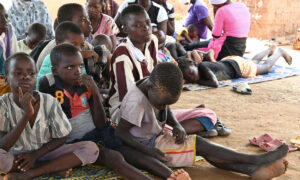
Ebimaro, also an acting Permanent Secretary, Federal Ministry of Budget and Economic Planning, pointed out that the visit had further provided valuable insight into how the intervention was shaping lives, fostering economic opportunities and rebuilding hope among conflict affected communities.
The chairman commended RESILAC’s of steady progress in strengthening local governance structure and supporting youth and women enterprises toward promoting inclusive recovery and environmental resilience.
He described the aforesaid as a reflection of the stakeholders shared determination.
“This tangible result lesson underscored effectiveness of collaboration among government, donors, implementing partners and the enduring resilience of the propl4e of the Lake Chad region.”
Ebimaro, who was represented by Mr Abdullahi Yakubu, Deputy Director and Head of Bilateral Cooperation at the Minis- try, provided further insights.
“The Federal Government of Nigeria, through the Ministry of Budget and Economic Planning, remain fully committed to sustaining and strengthening this partnership.
“Our collective objective is to align humanitarian and development effort with national priorities, particularly in areas of livelihood, recovery, social cohesion and peace building.
“The ministry will continue to promote a comprehensive approach to resilience building, ensuring that the gains made through the resilience cycle are integrated with broader national frameworks and inclusive growth and sustainable development,” he said.
The EU’s representative at the meeting, De Luca Maassimo, also expressed happiness over the progress made.
“I am very excited about the development so far and quite optimistic about the further off-take of the project in the coming months.
“I am aware of the challenges, but still comforted by the quality of the work carried out by our implementing partners and I think the situation is always evolving.
“I think that this is an element of this project that I would like to emphasise, meaning the assessment of the situation in the field, especially for most vulnerable people in,” he said.
For Sally Ibrahim, the representative of AFD, the stakeholders’ meeting “is an important step for the programme and for the impact that the programme is hoping to achieve by the end of its implementation period.”
In his submission, Mr Thierno Diallo, the Country Director, Action Against Hunger, Nigeria (ACF), said that the project was timely and capable of reducing poverty in Nigeria if sustained.
He insisted that RESILAC was specially designed as a regional programme to address the root cause of poverty in conflict affected communities.

Recommended for you





Leave a Reply
Leave a Reply