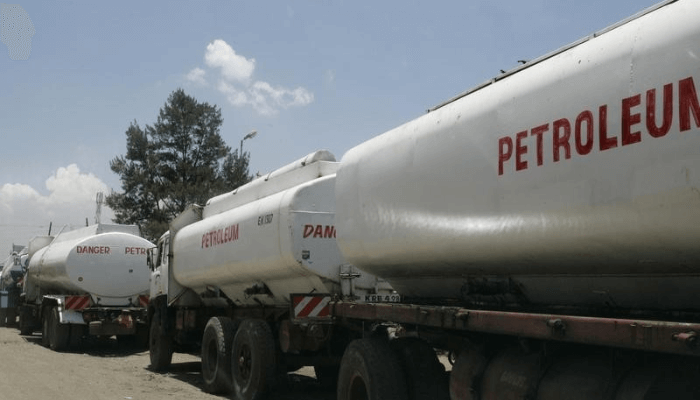
Nigeria’s average daily consumption of Premium Motor Spirit (PMS), commonly known as petrol, fell to 56.9 million litres in February 2026, down from the 60.2 million litres recorded in January, according to new industry data released by the Nigerian Midstream and Down- stream Petroleum Regulatory Authority (NMDPRA).
The figures reflect changing supply patterns in the country’s downstream petroleum sector as domestic refining capacity gradually expands.
The data showed that petrol supply from the Dangote Refinery also declined during the same period, dropping to 36.5 million litres per day in February from 40.1 million litres per day in January.
Overall domestic petrol supply experienced an even steeper fall, decreasing to 39.6 million litres per day in February compared to 64.9 million litres per day in the preceding month.
The development suggests continued adjustments within Nigeria’s fuel distribution chain as the market responds to evolving production and supply realities.
Meanwhile, the report revealed a different trend in the diesel market, where domestic supply recorded a noticeable increase.
Average daily supply of Automotive Gas Oil (AGO), commonly known as diesel, rose to 24.4 million litres in February, up from 18.9 million litres in January.
The increase was largely supported by production from modular refineries and the evacuation of previously refined diesel from some state-owned facilities.
Among the modular refineries operating during the period, the WalterSmith Refinery ran at about 59.66 percent capacity utilisation, supplying approximately 0.112 million litres of diesel per day.
The Edo Refinery and Petrochemicals Company recorded one of the highest utilisation rates at 81.66 percent, delivering around 0.085 million litres daily, while the Aradel Refinery operated at 34.47 percent capacity, supplying roughly 0.171 million litres per day.
However, two modular facilities — the OPAC Refinery and Duport Refinery — remained shut during the month.
The latest figures illustrate a transitional phase in Nigeria’s downstream sector as the country gradually shifts toward increased local refining, while still grappling with supply fluctuations and ongoing refinery rehabilitation projects

Recommended for you






Leave a Reply
Leave a Reply