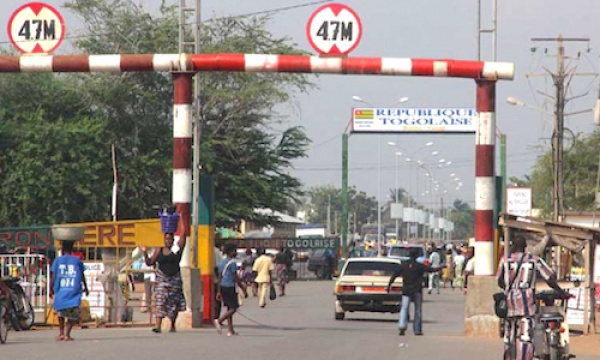
The Board of Directors of the African Development Fund (ADF) has approved a $59.78 million loan to support the rehabilitation of a key transborder road section linking Benin and Togo as part of efforts to boost regional trade and economic integration in West Africa.
The financing, approved on 21 May, will fund the rehabilitation of 78.8 kilometres of road between Kara and Kabou along the Benin-Togo border as part of the first phase of the Transit Roads and Transport Facilitation Project on the CU18 corridor
The project is co-financed by the ADF, the concessional lending arm of the African Development Bank (AfDB) Group, the Islamic Development Bank (IsDB), the West African Economic and Monetary Union (WAEMU), and the governments of Togo and Benin.
Of the total ADF funding, $50.28 million has been allocated to the Togolese section of the corridor, while the Beninese section will receive $9.5 million.
“This vital corridor will help strengthen economic competitiveness, accelerate the opening up of the inland areas of Benin and Togo, and consolidate sub-regional integration,” said Lamin Barrow, Director General for West Africa at the African Development Bank.
The project includes the upgrading of the corridor stretching from the Benin border at Ouaké through Kémérida, Soundjina, Kara, Djamdé and Kabou into a 3.5-metre dual carriageway, with a six-lane section through the city of Kara.
The project will also support the construction and rehabilitation of socioeconomic and educational infrastructure; strengthen transport services and logistics along the corridor and introduce measures to reduce trade barriers and improve traffic flow. Capacity-building programmes for project implementing agencies, women’s groups, and youth employment initiatives are also planned.
Road users, particularly women, local producers and residents, are the expected beneficiaries of the project.
Poor road conditions and high transport costs have long constrained economic activity and mobility in the region, disproportionately affecting vulnerable populations, particularly women engaged in cross-border commerce and market gardening.

Leave a Reply
Leave a Reply