- Lasting solution, Stronger Bond
This Southern Africa trip with Mr. Peter Obi, from Lagos to Johannesburg to Cape Town and back has been, for me, far beyond movement across cities and meetings across borders. It has been an opportunity for deep observation, learning, reflection, and a closer understanding of leadership, nation-building, and the burden of carrying the hopes of people across different spaces and circumstances.
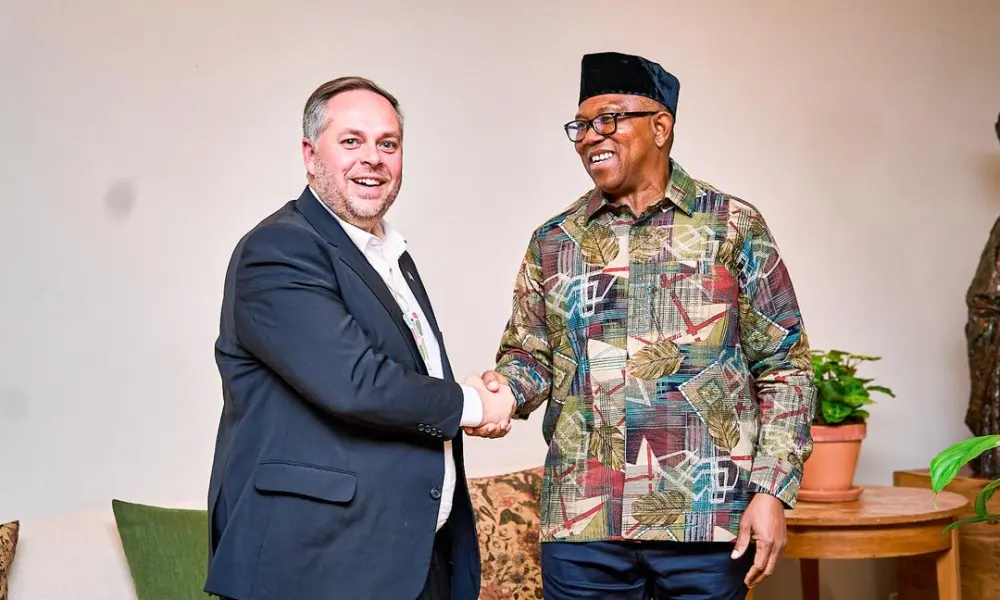
Beginning in Cape Town, at the Spier dialogue on Africa’s growth and development, I watched Mr Peter Obi engage leaders from across the continent and beyond with remarkable humility and depth. Mr Peter Obi introduced me to the Mayor of Cape Town, political leaders, diplomats, academics, development experts, and participants who had come from different parts of Africa, Europe, and America. What stood out immediately was not merely recognition, but the genuine warmth, respect, and attentiveness with which people received him. Across ideological and political divides, there was a visible acknowledgment of his consistency, clarity, and moral standing.
For me, however, the most profound moments were often not on the podium, but in the quieter spaces, observing how Mr Peter Obi listens, the questions he asks, and the seriousness with which he approaches even the smallest conversations. Whether speaking to former Presidents, current ministers, political leaders, diaspora Nigerians, or ordinary citizens, his first instinct is always to ask questions, how are Nigerians faring? What are the challenges? How are our people treated? What opportunities exist? What lessons can Nigeria learn? What systems are working? What systems are failing?
There is something deeply instructive about seeing a leader genuinely curious, genuinely listening, and genuinely concerned. At the dialogue in Cape Town, when Mr Peter Obi delivered his key address on policies for growth in Africa, he spoke with clarity about the tragedy and paradox of a continent so blessed with natural and human resources still struggling under the weight of poor leadership, corruption, weak institutions, and misplaced priorities. But what struck me most was how seamlessly he connected the broader African conversation with the realities at home in Nigeria.
Mr Peter Obi spoke about leadership not as an abstract concept, but as a lived responsibility. He explained how the quality of governance within a nation ultimately reflects how its citizens are perceived and treated beyond its borders. That leadership at home shapes dignity abroad. That when governance fails, citizens often carry the burden internationally. Yet even while addressing difficult truths, he consistently defended the integrity, resilience, brilliance, and hard work of Nigerians everywhere. Mr Peter Obi raised hope while still confronting reality. He challenged systems without condemning people. He spoke honestly, but never hopelessly.
In Johannesburg and Cape Town, the interactions with Nigerian communities were deeply emotional and revealing. Many shared concerns, fears, frustrations, and experiences about migration, identity, economic hardship, and social tensions. Yet in those interactions, I also saw something else, the trust and emotional connection people have with Mr Peter Obi. Not merely politically, but personally. People spoke to him as someone who understands their pain and still believes in their future.
Watching Mr Peter Obi’s engagements with South African ministers and political leaders was equally enlightening. The discussions were thoughtful, respectful, and frank. There was no grandstanding, no unnecessary drama, just serious conversations around governance, migration, law, regional cooperation, and the future of Africa. Even in disagreement, there was mutual respect.

Recommended for you





Leave a Reply
Leave a Reply