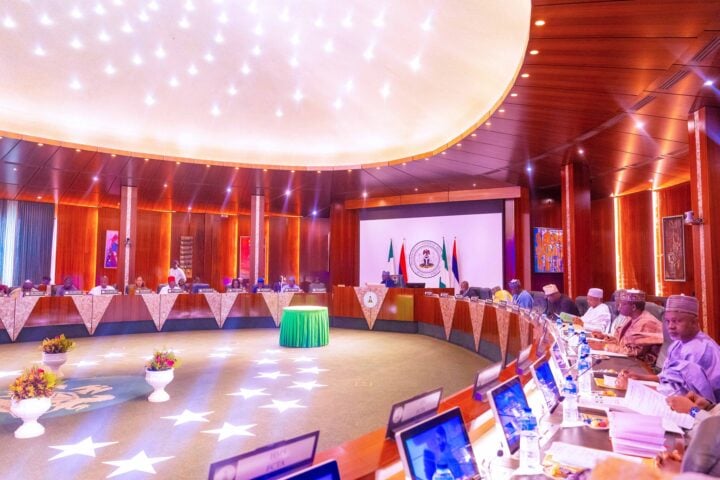
The federal government has imposed a six-year ban on the establishment of universities, polytechnics and colleges of education.
At its meeting presided over by President Bola Tinubu on Wednesday, the federal executive council (FEC) also restored the National Commission for Mass Literacy, Adult and Nonformal Education (NMEC) to its full status as an independent commission.
Tunji Alausa, minister of education, relayed the resolutions to State House correspondents, noting that the temporary freeze on new tertiary institutions is aimed at strengthening quality and ensuring sustainability across existing institutions.
“Today, access is not easy in the country. We have lots of tertiary institutions, both public and private. We need to help these private institutions be sustainable financially,” Alausa said.
He cited figures from the Joint Admissions and Matriculation Board (JAMB), stating that over 2.3 million candidates applied for admission last year, while fewer than 228,000 secured placements in public universities.
The minister expressed concern over Nigeria’s literacy crisis, saying Tinubu granted full independence to NMEC after its chairman presented an “expansive agenda to educate over 50 million young adults in the next two to three years, and to make them digitally literate”.
Today, we have about 56 mil- lion Nigerians that are illiterate. We can’t continue to have a high number of citizens that are illiterate,” Alausa said, adding that the commission would intensify out- reach in rural areas through radio, television, public advocacy and community-based learning centres.
The minister added that FEC also approved amendments to the National Postgraduate Medical College Act to recognise medical fellowships as equivalent to a PhD for academic progression, and granted comprehensive insurance coverage for the 180 federal unity schools nationwide.
NMEC was established under Decree No. 17 of 1990 (later codified as Act No. 18 of 2004) by the military administration, with the formal commencement date of June 25, 1990.
The commission was created to serve as the primary statutory body responsible for designing, promoting, and implementing strategies to combat illiteracy, working collaboratively with federal, state, and local governments, as well as non-governmental organisations.

Recommended for you





Leave a Reply
Leave a Reply